
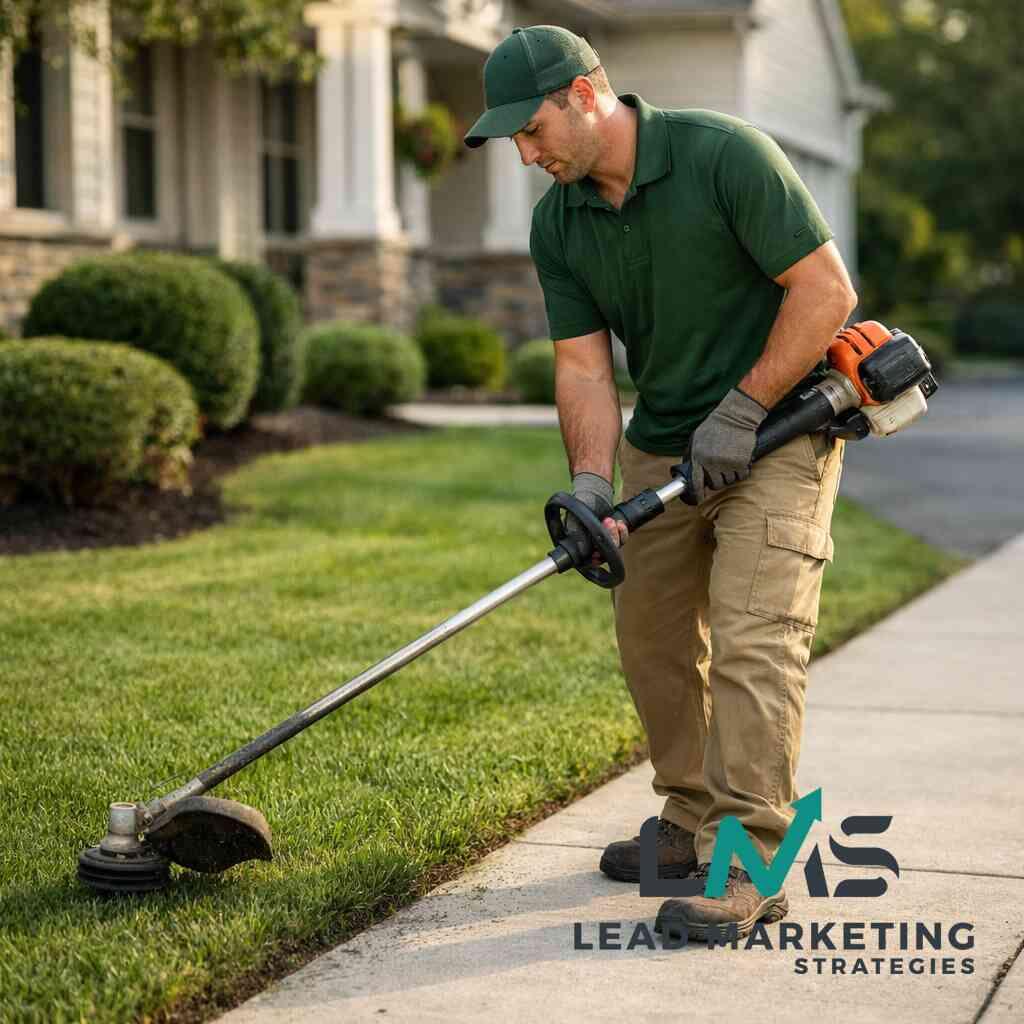
Most landscaping PPC campaigns waste money because they attract the wrong clicks, send traffic to the wrong page, or fail to follow up fast enough. If your ads are getting attention but not quote requests, the problem is usually the setup, not the market.
Key Takeaways
- High click volume is not success if those clicks do not turn into calls, form fills, or booked estimates.
- Local targeting must match your actual service area and crew routes, or you pay for leads you cannot serve.
- Negative keywords matter because they block DIY searchers, job seekers, and price shoppers from draining budget.
- Ad copy and landing pages must match so homeowners see one clear offer and one clear next step.
- Seasonal bid changes are essential because demand, competition, and close rates shift throughout the year.
- Fast follow-up improves landscaping marketing ROI because many leads hire the first responsive company.
1) The hidden budget leaks that turn a promising landscaping PPC campaign into a money pit
The biggest landscaping PPC mistakes usually hide in plain sight: broad match terms, weak tracking, and no search term review. A campaign can look active and still waste half the spend on clicks that never had a chance to become lawn service lead generation. That is frustrating, expensive, and common.
Why high click volume without quote requests is the most expensive illusion in lawn care Google Ads
Click volume feels good. Calls and quote requests pay the bills. If your landscaping Google Ads are getting traffic but your phone is quiet, the issue is often that you are measuring the wrong thing or sending ads to people who are not ready to hire.
We see this most often with residential lawn care advertising. A homeowner may click three ads, compare prices, and leave without contacting anyone. That is normal. The problem starts when the campaign keeps buying those same low-intent clicks without enough conversion data to guide it.
A cleaner way to judge performance is to watch these four numbers together:
- cost per lead
- quote request rate
- phone call quality
- close rate by service type
The Google Ads Management for Landscapers page is a good starting point if you want a tighter paid search structure. It matters because landscaping marketing ROI improves when you track sales outcomes, not just traffic.
How a weak search term audit sends your budget into residential lawn care advertising dead ends
A search term audit is where you find the waste. Without it, your budget can drift into “DIY lawn care,” “landscaping jobs,” or “cheap mulch near me” searches that never produce a real estimate. A proper audit should happen weekly at first, then monthly once the campaign stabilizes.
One client near Commack was spending on queries tied to how-to searches and part-time jobs. We tightened the list, added negatives, and shifted budget toward local landscaping PPC terms tied to booking intent. The result was fewer clicks, but better leads.
Use this simple filter:
Search term typeActionService-intent searchesKeep and bid morePrice-only searchesTest separatelyDIY or how-to searchesAdd as negative keywordsJob or career searchesExclude immediatelyIf you want a deeper framework, the Top 5 Lawn Care SEO Mistakes That Hurt Lead Generation article explains the same problem from the organic side. The logic is similar: bad traffic is bad traffic.
2) The wrong local targeting that pays for clicks outside your real service area
Bad geo-targeting is one of the fastest ways to waste ad spend for landscapers. If your ads show in areas your crew will not travel to, or neighborhoods where the job size is too small, you will pay for leads you cannot profitably serve. Local landscaping SEO and PPC work best when the map matches your routes.
Why geo-targeting for landscaping ads must match neighborhoods, routes, and crew capacity, not broad county settings
County-wide targeting sounds efficient. It usually is not. Landscapers sell by drive time, truck capacity, and route density, not by abstract map boundaries. If a crew can service three Long Island neighborhoods in a day, your PPC should reflect that reality.
For local landscaping SEO and paid ads, use tighter settings:
- Set radius targeting around profitable zip codes.
- Exclude fringe towns where travel kills margin.
- Separate residential and commercial campaigns by service area.
- Adjust bids by neighborhood performance, not just by city name.
Here is the part most owners miss: a $120 lead that comes from a long drive can cost more than a $220 lead that is five minutes away. That is why Lead Generation for Landscapers should always be paired with route planning.
How service area targeting for landscapers changes for Commack, Long Island, and nationwide campaigns
In Commack and across Long Island, dense neighborhoods and short travel times can support tighter bid maps and faster response windows. At our office in Northgate Shopping Center in Commack, NY, we often see campaigns improve just by trimming the service area. The same logic applies nationwide, but the map changes with the crew model.
A tree service in Texas may need wider radius targeting than a lawn maintenance company on Long Island. A commercial contractor may even split campaigns by borough, town, or route cluster. The point is simple: local targeting for landscapers should follow operations, not vanity reach.
If you want a second opinion, the Local Landscaping Marketing Agency Near You page is useful for businesses that want calls from people nearby and ready to book.
3) The search terms that look busy but attract the wrong homeowners and property managers
The wrong search terms can make a campaign look busy while delivering poor leads. Without a strong negative keyword strategy for landscapers, you invite research traffic, hiring traffic, and bargain hunters who are not ready to buy. That is one of the most common lawn care Google Ads mistakes.
How a missing negative keyword strategy for landscapers lets in DIY researchers, job seekers, and bargain hunters
Search terms are where intent lives. Someone searching “how to edge a lawn” is not the same as someone searching “weekly lawn care quote.” Yet many campaigns treat them the same because the account has no real exclusions.
A good negative keyword list should remove:
- DIY and tutorial searches
- jobs, hiring, salary, and career terms
- free, cheap, and bargain-only searches
- equipment and supply searches
- unrelated city names you do not serve
The What Is PPC Advertising for Lawn Mowing Services in 2026 guide is a strong reference if you are still shaping your campaign structure. It also helps explain why landscaping PPC works best when intent is narrow and specific.
Why landscape contractor advertising needs separate query controls for residential landscaping marketing and commercial landscaping marketing
Residential and commercial leads behave differently. A homeowner wants a quick quote for mowing, pruning, or mulch. A property manager may want insurance proof, a maintenance schedule, and a vendor packet. If you merge them, your ads and search terms start pulling against each other.
For Residential Landscaping Marketing campaigns, keep the language simple and local. For Commercial Landscaping Marketing campaigns, emphasize reliability, scope, and repeat service. That separation usually lowers wasted spend and improves close rates.
4) The ad copy that promises everything and convinces no one
Weak ad copy is a trust problem. If your message sounds generic, homeowners assume your service is generic too. Good landscaping ad copy optimization should say exactly who you help, what you do, and why you are worth the call.
Why vague landscaping ad copy kills trust when a homeowner is comparing three local bids
Most homeowners compare several bids before they decide. If your ad says “quality landscaping services” and the next ad says “weekly lawn maintenance, same-week estimates, insured crews,” you already lost the first impression. Specificity wins because it feels real. A stronger ad usually includes: 
- one primary service
- one local area
- one trust signal
- one action step
The Top 7 Landscaping PPC Campaigns for Faster Lead Growth article covers campaign types that pair well with sharper messaging. If you also run Facebook Advertising for Landscapers, keep the tone consistent so prospects do not see one promise in search and another on social.
How landscaping ad copy optimization should speak to one service like hardscaping marketing or tree service marketing ads at a time
One ad group should usually promote one service. That means hardscaping marketing should not share copy with tree service marketing ads, and irrigation marketing should not sound like lawn treatment marketing strategies. The tighter the message, the better the click quality.
A good rule is this: if the service needs a different truck, different crew, or different estimate process, it deserves its own ad set. That approach is common in Tree Service Marketing and hardscaping PPC advertising alike. It also makes your reports easier to read.
5) The landing page mismatch that makes your click cost more than your lead
A bad landing page turns good traffic into expensive traffic. If the ad promises one service and the page says “welcome to our company,” users bounce. Landscaping website design for conversions matters because it keeps the offer focused and the next step obvious.
Why landscaping website design for conversions matters more than sending traffic to a generic homepage
Sending PPC traffic to a homepage is one of the easiest ways to waste money. Homepages usually have too many links, too many services, and too little urgency. A dedicated page for lawn maintenance lead generation performs better because it removes distractions.
A better landing page should include:
- a headline that repeats the ad promise
- one clear service area
- proof, such as reviews or photos
- a short form and phone number
- a direct call to action
The Website Design for Landscapers page is worth reviewing if your current page feels crowded or slow. Good landscaping website design does not just look polished. It helps people act.
How landing page conversion for landscapers improves lawn maintenance lead generation when the offer matches the ad
When the offer matches the ad, conversion rates usually improve because visitors feel less friction. A campaign for landscape maintenance advertising should not send people to a page focused on irrigation service ads or tree pruning. That mismatch confuses the visitor and weakens trust.
We once reviewed a Long Island account where the ads were strong, but the landing page buried the quote form below a long brand story. After simplifying the page and aligning it with the ad, the call rate improved within weeks. For more context, the Landscaper Marketing Blog has related examples.
6) The bidding habits that overpay for peak season and underperform when demand shifts
Bidding too aggressively in peak demand wastes money. Bidding too cautiously when demand softens leaves leads on the table. Seasonal landscaping ad campaigns work best when you adjust bids, budgets, and remarketing based on real demand patterns.
How bid strategy for landscaping PPC should change with seasonal demand forecasting for lawn care
Lawn care demand does not stay flat. Spring cleanup, midsummer maintenance, storm damage, and late-fall services all pull differently. A smart bid strategy for landscaping PPC follows that rhythm instead of using one static budget all year.
A practical seasonal structure looks like this:
PeriodBid approachGoalPeak demandHold efficient top positionsProtect cost per leadShoulder periodsTighten to best termsPreserve marginSlow periodsShift to remarketing and niche servicesKeep pipeline activeIf you need help with timing and pacing, Seasonal Campaign Management is built for this exact issue. It is especially useful for lawn care PPC campaign management when weather and demand swing fast.
Why lawn care PPC campaign management needs separate pacing for landscaping Google Ads and remarketing for landscaping services
Not every click should be treated the same. Search ads are demand capture. Remarketing is follow-up. When they share the same budget without planning, one can starve the other.
A better model is to reserve part of the budget for people who visited your site but did not call. That is where remarketing for landscaping services can recover interest after the first visit. It also supports local SEO and PPC for landscapers by keeping your brand visible while prospects compare options.
7) The follow-up system that wastes leads after the form fill and before the sale
Many campaigns fail after the lead arrives. If nobody answers quickly, calls go to voicemail, or no one tracks which ad produced the lead, you lose work you already paid for. That is why call tracking for landscaping ads matters so much.
Why call tracking for landscaping ads and fast response times matter more than most landscaper digital marketing plans realize
Speed is money. In our experience, the first responsive contractor often gets the job, especially for residential lawn care marketing and tree service calls after storms. Call tracking shows which ads produce real conversations, not just clicks.
A simple response system should include:
- Call forwarding during business hours.
- Text-back on missed calls.
- Form alerts to a live inbox or phone.
- Recorded call review for lead quality.
- Separate tracking numbers for each campaign.
The Lead Marketing Strategies on Google Maps listing is useful if you want to confirm the agency location in Commack. Our office is at Northgate Shopping Center in Commack, NY, and we work with businesses across Long Island and all 50 states. The setup matters because call speed often decides the sale.
How to connect local SEO and PPC for landscapers so your landscaping marketing ROI keeps improving after the click
PPC should not live alone. When local SEO supports the same services, your ads become more efficient because people see you in multiple places before they call. That is the core of lawn care SEO and paid search working together.
A strong mix usually includes Google Business Profile optimization, consistent NAP data, review management, and service pages that match your ads. If you want a specialized team, Landscaping Marketing Strategies focuses only on landscaping marketing services for landscapers and lawn care companies. You do not have to figure out every part at once, but you do need a clean next move: review your search terms, fix the landing page, and book a strategy call at +18335323100 or download the Landscaping Marketing Strategies app when you are ready to tighten the system.
Frequently Asked Questions
Question: What are the most common landscaping PPC mistakes that lead to wasted ad spend for landscapers?
Answer: The biggest landscaping PPC mistakes usually come from poor campaign structure, weak tracking, and targeting the wrong search intent. Common issues include broad match keywords that pull in DIY traffic, no negative keyword strategy for landscapers, sending ads to a generic homepage instead of a focused landing page, and failing to review search terms regularly. These problems raise cost per lead and make landscaping Google Ads look less effective than they really are.
At Landscaping Marketing Strategies, we help businesses fix these issues with a tighter landscaping marketing plan built around real lead generation, not vanity clicks. That means improving landscaping Google Ads optimization, refining ad groups by service, and aligning every campaign with your actual goals, whether that is lawn service lead generation, residential lawn care advertising, or commercial landscaping marketing. If you want better landscaping marketing ROI, the first step is identifying where money is leaking and rebuilding the account around intent.
Question: How can local landscaping PPC and geo-targeting for landscaping ads improve lawn service lead generation?
Answer: Local landscaping PPC works best when your service area matches your crew routes, capacity, and profitable neighborhoods. If your ads run across towns you cannot serve efficiently, you end up paying for clicks that never turn into jobs. Strong geo-targeting for landscaping ads helps you focus on the right zip codes, exclude low-value locations, and prioritize areas where you can complete more jobs with less travel time.
That is especially important for landscaper digital marketing because route density directly affects margin. Landscaping Marketing Strategies helps companies set up service area targeting for landscapers that supports real-world operations, not just map reach. Whether you need local SEO and PPC for landscapers, Long Island landscaping marketing, or NY landscaper marketing, we structure your campaigns so every click has a better chance of becoming a call, estimate, or booked project. This is one of the best landscaping marketing strategies for increasing landscaping leads without bloating your budget.
Question: Why does negative keyword strategy for landscapers matter so much in landscaping Google Ads optimization?
Answer: Negative keywords protect your budget from searches that do not lead to customers. Without them, your ads can appear for job seekers, DIY researchers, bargain hunters, and people looking for equipment or tutorials instead of hiring a professional. That is one of the most overlooked lawn care Google Ads mistakes and a major reason for high cost per lead landscaping ads.
A strong negative keyword strategy for landscapers helps keep your account focused on real buyer intent, which improves lawn care PPC campaign management and overall lead quality. At Landscaping Marketing Strategies, we review search terms carefully and build exclusions around residential lawn care advertising, tree service marketing ads, irrigation service ads, hardscaping PPC advertising, and other service lines. This approach is especially useful for landscaping lead generation companies that want to scale while keeping waste under control. It is one of the most reliable ways to improve landscaping marketing ROI and how to get more lawn care customers with less wasted spend.
Question: How does landscaping website design for conversions affect landing page conversion for landscapers?
Answer: A strong ad can still fail if the landing page does not match the offer. Landscaping website design for conversions matters because your page needs to reinforce the ad promise, make the service clear, and give the visitor one obvious next step. If someone clicks an ad for lawn maintenance lead generation but lands on a cluttered homepage with too many links, the chance of conversion drops fast.
Our team at Landscaping Marketing Strategies builds landscaping web design and landing pages that support landscaping ad copy optimization, trust signals, and clear calls to action. We design pages for services like lawn maintenance SEO, landscape maintenance advertising, landscape contractor advertising, lawn treatment marketing strategies, landscape construction marketing, and garden design advertising. That alignment improves landing page conversion for landscapers and gives your landscaping marketing agency a better chance to turn traffic into booked estimates. Better pages also support landscaping branding and long-term landscape business growth.
Question: What makes seasonal landscaping ad campaigns and bid strategy for landscaping PPC so important during the year?
Answer: Demand changes throughout the year, and your bids should change with it. Seasonal landscaping ad campaigns help you stay competitive during peak periods while avoiding overspending when demand softens. A smart bid strategy for landscaping PPC takes into account spring cleanups, summer maintenance, storm response, fall cleanup, and winter planning so your budget follows real customer behavior.
Landscaping Marketing Strategies uses seasonal demand forecasting for lawn care to help clients pace campaigns more effectively. That includes adjusting bids, pausing low-performing terms, shifting spend toward remarketing for landscaping services, and emphasizing the services most likely to convert at each stage of the year. This approach works well for lawn care advertising agency clients, commercial landscaping marketing accounts, and residential lawn care marketing campaigns alike. When your timing is right, your landscaping marketing ROI improves and your budget goes further.
Question: How do call tracking for landscaping ads and fast follow-up improve landscaping marketing ROI after the click?
Answer: A lot of landscaper digital marketing problems happen after the lead comes in. If nobody answers quickly, the prospect may call the next company on the list. Call tracking for landscaping ads helps you see which campaigns generate real conversations, but it also helps you respond faster and measure which services actually close.
At Landscaping Marketing Strategies, we recommend tracking every major source of lawn service lead generation, including landscaping Google Ads, landscaping Facebook ads, remarketing for landscaping services, and local SEO and PPC for landscapers. We also help clients connect tracking with internal follow-up so missed calls, form fills, and texts do not get lost. This is especially valuable for lawn care digital marketing, organic lawn care marketing, and landscaping marketing services that need clear reporting. If you want to increase landscaping leads and build a stronger system for how to market a landscaping business, fast response and accurate tracking are essential.
Every article is written by one of our founders and independently reviewed by the other before it goes live.

Ken Key is Chief Technology Officer and Co-Owner of Landscaping Marketing Strategies. He handles the technical side of landscaping marketing and SEO, alongside his wife Dominique. Ken writes about practical ways to grow your landscaping business with honest, data-backed strategies.

Dominique Key is Chief Marketing Officer and Co-Owner of Landscaping Marketing Strategies. She helps landscapers, lawn care companies, and outdoor-services businesses grow through branding, SEO, and lead generation that treats every client like family. Dominique runs the agency alongside her husband Ken.


