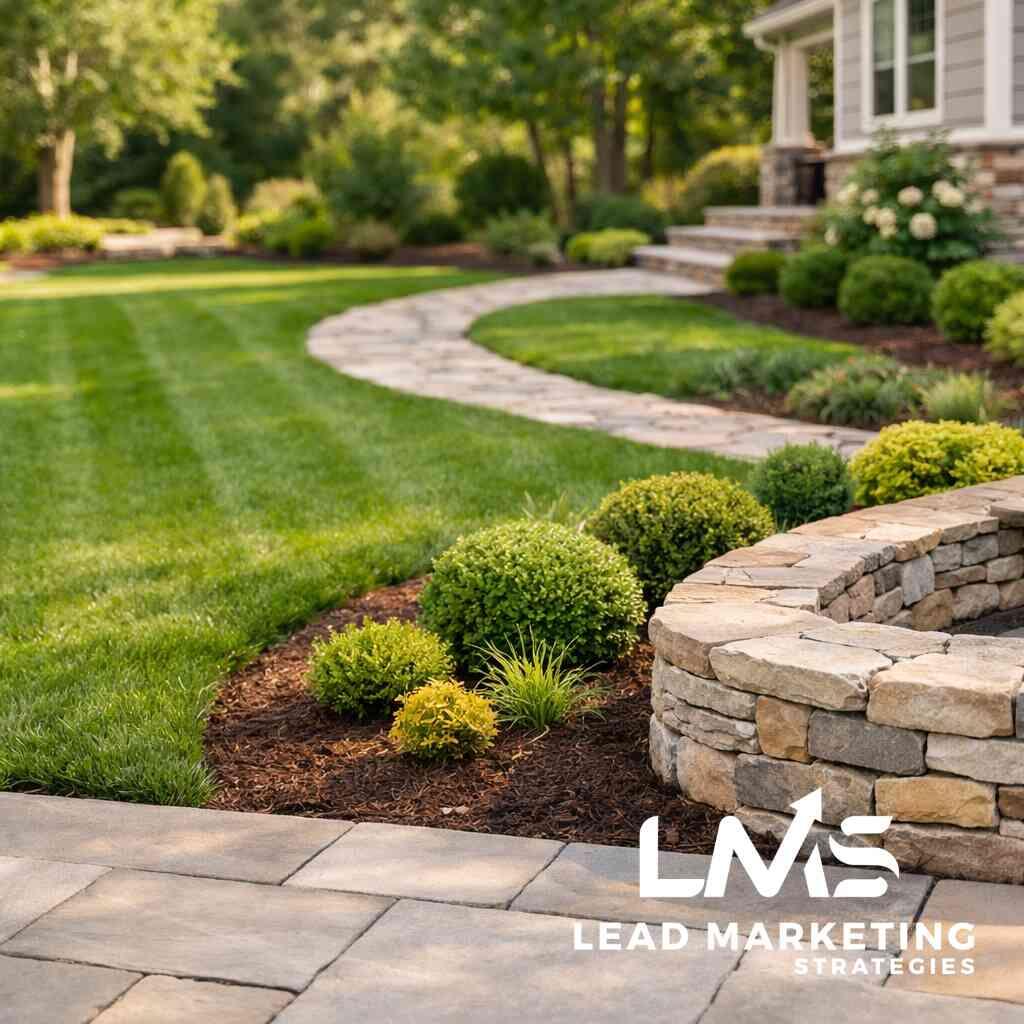

PPC for Landscaping: What It Is and Why It Works
Pay-per-click advertising puts your landscaping company in front of homeowners and property managers at the exact moment they are searching for what you sell. You pay only when someone clicks, and every dollar is trackable. Done right, PPC for landscaping fills your calendar with the jobs you actually want. Done wrong, it drains your budget on tire-kickers looking for a $40 mow.

The difference comes down to structure, targeting, and knowing which services deserve paid ads and which do not. Here is how we approach it with the landscapers we work with, and what we would do in your boots heading into 2026.
How Much Should a Landscaping Company Spend on Google Ads Per Month?
Most residential landscapers need a minimum of $1,000 to $1,500 per month in ad spend to gather meaningful data, and design/build or commercial-focused companies typically need $2,500 to $5,000 or more to compete in metro markets. There is no universal number. Your budget should follow your average job value and your capacity to handle the leads that come in.
Think of it this way. If your average hardscaping project is $15,000 and your cost per qualified lead is $150, you can afford to be aggressive. If you are selling $50 weekly mows, the math changes fast. Start with a budget that lets you run for at least 60 to 90 days without panicking, because the first month is data collection, not peak performance.
In our experience, the landscapers who struggle with paid ads are the ones who set a $300 monthly budget, check it after four days, and shut it off. That is not enough spend to exit the learning phase of any platform.
How Do I Get High-End Hardscaping Leads From PPC?
You get high-end hardscaping leads by bidding on design and build intent keywords, filtering out maintenance searches with negatives, and layering income and geography targeting so your ads only show to homeowners who can afford the project. Then you send those clicks to a page built around portfolio work, not a generic services page.
A few specifics that move the needle:
- Bid on project language, not task language. “Paver patio installation,” “outdoor kitchen builder,” and “retaining wall contractor” attract project buyers. “Patio cleaning” does not.
- Use income demographics. Google and Meta both let you layer household income brackets over your geographic targeting. Overlay the top 10% and 11 to 20% brackets on your premium neighborhoods and watch lead quality shift.
- Geo-fence the right ground. New housing developments, country clubs, and commercial business parks are worth targeting by name, not just by zip code.
- Show the work. Video assets of finished hardscapes, fire features, and outdoor kitchens perform far better than stock photography. Google’s automated campaigns will lean on whatever assets you give them, so give them good ones.
This is also where your landing page earns its keep. If someone clicks an ad for a $40,000 outdoor living space and lands on a page about lawn care, you have wasted the click. Match the page to the promise in the ad, every time.
Why Am I Getting Cheap Lawn Mowing Calls From My Google Ads?
You are getting low-value calls because your campaigns are bidding on broad match terms and your account has no negative keyword list blocking maintenance and DIY searches. Google’s automated bidding will happily chase the cheapest conversion available, and cheap conversions usually mean small jobs.
Build what we call negative keyword moats. Add these as phrase or exact negatives to protect your budget:
- diy, how to, tutorial, free, cheap, budget
- hourly rate, per hour, estimate calculator
- lawn mower repair, tractor supply, equipment rental
- jobs, hiring, salary, career
- grass seed, fertilizer bag, sod price
Review your search terms report weekly for the first 60 days, then every two weeks after that. Every account we audit has at least a handful of wasted spend categories hiding in there. Small fixes, big savings.
Should Landscapers Use Local Services Ads or Traditional PPC?
Use both, but for different jobs. Local Services Ads, with the Google Guaranteed badge, are your first line of defense for quick-turnaround, high-intent services like tree removal, storm cleanup, and seasonal maintenance. Traditional search and Performance Max campaigns are better suited for design/build, hardscaping, and higher-ticket projects where buyers research longer.
LSAs put you at the very top of the results page and you pay per lead rather than per click. For urgent services, that placement is hard to beat. For a homeowner planning a backyard renovation over several months, the search ad with a strong landing page and portfolio still wins. Running both lets you cover the fast lane and the slow lane at once.
If you want help mapping which services belong in which channel, book a free consultation and we will walk through your service mix together.
Is Facebook Ads or Google Ads Better for Landscape Design/Build?
Google Ads capture demand that already exists, while Facebook and Instagram create demand among homeowners who were not actively searching yet. For design/build, the strongest results usually come from running both. Google catches the homeowner typing “paver patio contractor near me,” and Meta keeps your finished projects in front of local homeowners until they are ready to call.
Visual platforms matter more than most landscapers realize. Before and after transformations, walkthrough videos, and short project reels are natural fits for Instagram, Facebook, and even YouTube Shorts. Retargeting people who watched your project video is one of the most cost-effective moves in the entire funnel. If you are not running visual retargeting yet, you are leaving warm leads on the table. Our Facebook ads team builds these campaigns around your actual project footage.
What Is a Good Cost-Per-Lead for Residential Landscaping?
A good cost per lead for residential landscaping generally falls between $40 and $150 depending on your market, the service, and how tight your targeting is. Maintenance and cleanup leads sit at the lower end. Design/build and hardscaping leads run higher because the job value is higher.
But cost per lead is a vanity number on its own. What matters is cost per booked job and return on ad spend. A $200 lead that turns into a $30,000 patio is a fantastic lead. A $25 lead that never answers the phone is expensive no matter how it looks on a dashboard.
Set up conversion tracking that follows the lead past the form fill. Call tracking, CRM integration, and offline conversion imports let you tell Google which leads turned into signed contracts. That feedback loop trains the algorithm to find more of the good ones. Without it, you are optimizing blind.
How Do I Stop Out-of-Market Clicks on My Landscaping Ads?
Stop out-of-market clicks by setting your campaign geography to “presence” rather than “presence or interest,” tightening your radius around your actual service area, and excluding zip codes you do not serve. Then review the geographic report monthly to catch anything slipping through.
This one setting trips up more landscapers than almost anything else. “Presence or interest” will show your ads to people merely researching your area from three states away. Switch it to presence only. If you serve a 30-mile radius, set the radius and exclude the pockets outside it. Commercial work may justify a wider net, but residential campaigns should stay tight.
How Should Landscapers Use Performance Max in 2026?
Performance Max can work well for landscapers, but only with guardrails. Google’s automation will spend wherever it finds conversions, so you need to feed it strong assets, exclude low-value terms at the account level, and watch the search themes it reports.
Here is our playbook:
- Load real project video. Finished hardscapes, outdoor kitchens, and time-lapse builds give the system something worth showing.
- Set account-level negatives. Apply your moat list across the account so PMax cannot chase mowing searches for a design/build budget.
- Add audience signals. Upload your past customer list so Google knows who your buyers resemble.
- Review asset performance. Kill weak headlines and images, and replace them with what is converting.
- Separate budgets by service line. Do not let one campaign blend $50 maintenance jobs with $50,000 installs.
Automation is a tool, not a strategy. It still needs a human steering the inputs. Our landscaping lead generation services are built around exactly this kind of hands-on management.
How Do You Use First-Party Data to Win Repeat Landscaping Work?
Upload your past customer list to Google and Meta to target existing clients with seasonal offers before your competitors reach them. Fall aeration, spring planting, holiday lighting, and irrigation startups are all campaigns you can run to your own book of business at a fraction of the cost of cold acquisition.
Most landscapers have years of customer data sitting in a spreadsheet. That list is one of your most valuable marketing assets. Match it against ad platforms, build lookalike audiences from your best clients, and run seasonal upsell campaigns on a schedule. It is the cheapest revenue you will ever generate, and almost nobody in your market is doing it consistently.
Pair that with a solid email sequence and you have a retention engine running alongside your acquisition campaigns. If you want to see how that fits together, our email marketing for landscapers pairs naturally with paid retargeting.
What Should Your PPC Landing Page Include?
Your landing page should match the ad’s promise, show real project photos, include a short form and a click-to-call button, and load in under three seconds on mobile. Anything less and you are paying for clicks that bounce.
We often see landscapers send every ad to their homepage. That is a mistake. A homeowner searching for a retaining wall wants to see retaining walls, pricing guidance, and proof you have done this before. Build a dedicated page for each major service line, keep the copy tight, and make the phone number impossible to miss. Our full landscaping marketing guide covers how paid ads fit into the bigger picture of your online presence.
Frequently Asked Questions About PPC for Landscaping
How long before PPC starts producing landscaping leads?
You can see leads within the first week, but expect 60 to 90 days before the data stabilizes and you can judge true performance. The first month is for testing keywords, negatives, and landing pages. Give it time to breathe.
Can I run PPC for landscaping on a small budget?
Yes, if you focus. Pick one high-value service, one tight geographic area, and one landing page. A focused $800 monthly budget beats a scattered $2,500 budget every time.
How do I track phone calls from my landscaping ads?
Use call tracking numbers that forward to your main line, and tie them to your Google Ads and Meta campaigns. That way every call is attributed to the campaign that drove it, and you can see which keywords actually produce booked work.
Do I need a separate ad budget for commercial and residential work?
Yes. Commercial landscaping buyers search differently, evaluate differently, and convert on a longer timeline. Running them in the same campaign muddies your data and your messaging. Separate budgets, separate landing pages, separate tracking.
Let Us Build Your Landscaping PPC Plan
Paid ads work best when they are part of a complete system: strong landing pages, clean tracking, a reputation that backs up your claims, and a follow-up process that turns leads into signed contracts. That is what we build at Lead Marketing Strategies. We work with landscapers every day, and we know what separates a campaign that books $30,000 patios from one that just burns budget.
Ready to talk? Book a free consultation with our team, or call us directly at (833) 532-3100. We will review your current campaigns, your service mix, and your goals, and tell you honestly where the opportunity is.
And if you want to keep up with your campaigns from the field, download our mobile app for iOS or Android. It puts your marketing in your pocket, right next to your crew schedule.
Every article is written by one of our founders and independently reviewed by the other before it goes live.

Ken Key is Chief Technology Officer and Co-Owner of Landscaping Marketing Strategies. He handles the technical side of landscaping marketing and SEO, alongside his wife Dominique. Ken writes about practical ways to grow your landscaping business with honest, data-backed strategies.

Dominique Key is Chief Marketing Officer and Co-Owner of Landscaping Marketing Strategies. She helps landscapers, lawn care companies, and outdoor-services businesses grow through branding, SEO, and lead generation that treats every client like family. Dominique runs the agency alongside her husband Ken.